Rosebery Primary School
  • Home
  • Teaching Approaches
    • Kagan Co-operative Learning
    • Behaviour & Wellbeing
    • Welcome to Rosebery Primary
  • Facilities
    • Barylicious Canteen
    • Pre-School
    • Defence School Mentor
    • Outside School Care
  • School
    • School Annual Reports & Plans
    • History of RPS
    • Enrolments
    • School Policies
    • Staff
    • Sports Houses and House Captains
    • Student Population
    • Student Leadership
  • Parents
    • Cyber Safety
    • Uniforms and Supplies
    • School Council
    • Parent Handbook
    • 2024 Newsletters
    • 2025 Newsletters
    • 2026 Newsletters
  • Contact Us
    • Operating Times
    • Key Contacts
    • RPS Location
    • Absentee Form
  • Resources
Sign In

Message from the Principal

Students

Evidence Based Practices

At Rosebery Primary School, we believe in differentiating our learning programs. This means that the learning programs should cater for the individual needs and interests of all of our students.

How this works in our school is that teachers prepare programs each term that are firstly reflective of:

  • Who the students are. (ie, What are their strengths and weaknesses? What are their collective interests? What are their social needs? )
  • How our students are performing. (ie, What evidence do we have or need about academic levels? What gaps are there in our students’ learning? What trends can we see in our student groups?)

Teachers examine these key areas by developing the first section of their program which is titled “Student Profiles”. It is this evidence which becomes the platform for setting learning targets, selecting learning activities and determining assessment strategies.

So how is this different? We believe this approach accelerates student learning by providing real student-centred programs. Our teachers don’t simply pull out the same units of literacy, numeracy and science work that they may have taught at the same time in previous years. Our programs are reflective of our students and this drives up engagement. For instance, if we have a group of students with a particular need in reading and a particular interest in dinosaurs – then you can bet our teachers are looking for ways to effectively tailor the program to address and include both.

Evidence Based Programming means that all Rosebery PS students are being catered for, no matter the level at which they come to the curriculum. Whether they be gifted in particular areas or struggling in others, our teachers will know and will skillfully strategise to move forward with your child on a truly meaningful learning journey.

Sitting alongside Rosebery’s ‘Big 4’ (our ‘four guiding principles’, as cited in our Annual Operational Plan; Evidence Based Programming and Planning, Co-Teaching, Restorative Practices, and Kagan Cooperative Learning) are a range of other programs we use to facilitate, extend and enhance the learning experience for our students.

1st Steps Literacy

First Steps helps teachers address current literacy challenges in reading, writing, and speaking & listening. It provides teachers with steps that help them assess and monitor student needs and provides explicit links as to how to help children in the class improve their literacy skills.

Count Me In Too

Count Me In Too is a professional development program developed to support the effective teaching of mathematics in years K-6. At Rosebery, we are using Count Me In Too in the Early Years. The program melds findings from research about how children learn mathematics, with research on effective professional development. It has three major components:

  • A theory of number development based on research from around the world and described in a learning framework;
  • An individualised Schedule for Early Number Assessment used by teachers to place each child at a point within this framework; and
  • A professional development program designed to assist teachers better understand how children learn arithmetic.

EYLF

The Early Years Learning Framework describes the principles, practice and outcomes essential to support and enhance young children’s learning from birth to five years of age, as well as their transition to school. The Framework has a strong emphasis on play-based learning as play is the best vehicle for young children’s learning providing the most appropriate stimulus for brain development. The Framework also recognises the importance of communication and language (including early literacy and numeracy) and social and emotional development.

Primary Connections

‘PrimaryConnections: Linking science with literacy’ is based on an inquiry-orientated teaching and learning model. Students use their prior knowledge and literacies to develop explanations for their hands-on experiences of scientific phenomena. Students have opportunities to represent their developing understanding. They are engaged actively in the learning process. Students develop investigations skills and an understanding of the nature of science.

Jolly Phonics and Grammar

Jolly Phonics is a fun and child centered approach to teaching literacy in the early years. With actions for each of the 42 letter sounds, the multi-sensory method is very motivating for children and teachers. The sounds are taught in a specific order (not alphabetically). This enables children to begin building words as early as possible.

Using a synthetic phonics approach, Jolly Phonics teaches children the five key skills for reading and writing. Complemented by Jolly Readers and Jolly Grammar, it provides a thorough foundation for teaching literacy in our early years.

Spelling For Life

Success in spelling is not a product of intelligence. Many people struggle to spell due to coping strategies developed in place of explicit instruction.
Often students who can read and express themselves competently nevertheless find spelling difficult.

False assumptions about spelling, such as believing the English language is complex and/or irregular, damage confidence and lead to reluctance to even attempt to spell correctly.

Spelling For Life-trained teachers help to develop critical thinking and confidence when reading and spelling by taking students through this step-by-step program. Students discover the rules surrounding our language and learn to apply them with greater ease.

Teachers trained in SFL often report that they too gain an increased understanding of the patterns of English and how those patterns can be used to produce competent spellers.

Grammar For Life

Students are taught, through critical thinking, recognition of the parts of speech and their relationships to one another in sentences.

This also helps them to gain insights into using dictionaries and reference materials effectively. Students are then encouraged to gather the above skills to apply them to a thorough, enriching study of morphology.

The overall product is a student who has an increased understanding of how to use language across the curriculum.

Rosebery Preschool Philosophy


At Rosebery Preschool, we believe every child deserves to feel safe, known, and valued from their very first day. Our preschool program supports children to grow their confidence, independence, and love of learning through play, strong relationships, and predictable routines.
Our Values
We proudly follow our school values of Cooperation, Confidence, and Respect. We teach children to work together, take turns, use kind words and actions, and feel proud of their efforts as they learn and grow.

Learning Through Play (EYLF)
We follow the Early Years Learning Framework (EYLF) and implement National Regulations and Guidelines to ensure our program supports children’s wellbeing, learning, and development in a safe, high-quality early learning environment. We believe children learn best when they are engaged, curious, and supported by caring adults who understand their individual needs. Ourteam provides a welcoming environment where children are encouraged to explore, create, communicate, take healthy risks, and develop positive friendships.


 At Rosebery Preschool, we aim to create a calm, joyful environment where children feel confident to say:

“I belong here. I can do this. I am ready to learn. ”


Pre-School Operating Times and Days

Group 1: Monday & Tuesday 8.00am to 2.30 pm
Group 2: Thursday & Friday 8.00am to 2.30pm
  Wednesday 8.00am to 12.00pm

IMG 2809


Procedures


Child Safe Environment
Animals in Schools:
  • Animal Risk Management Plan
Digital Technologies:
  • Public_Photos_and_Media_Procedure_RoseberyPreschool 
  • Digital Safety_DET
Dietary:
  • Dietary Minimazation Plan
Play:
  • Front_Courtyard_Play_Procedure_RosberyPreschool
Wellbeing:
  • Behaviour_Guidance_Procedure_RoseberyPreschool
  • Basketball risk-management-plan
Delivery, Collection and Transportation
    • Arriving and Departing from Rosebery Primary School
    • Collection_To_and_From_OSHC_Procedure_RoseberyPreschool
    • Late_Pick_Up_Procedure_RoseberyPreschool
    • Safe arrival and pick up risk assessement plan
    • Unauthorised_Parent_Carer_Collection_Procedure_RoseberyPreschool
Enrolment and Orientation
  • Enrolment_and_Orientation_Procedure_RoseberyPreschool
Emergency and Evacuation
  • Preschool_Evacuation_Procedure_RoseberyPreschool
  • Preschool_Front_Door_Safety_Procedure_RoseberyPreschool
  • Preschool_Lockdown_Procedure_RoseberyPreschool
Health and Safety
Toileting:
  • Toileting Procedure
Sleep and Rest:
  • Sleep_and_Rest_Procedure_RoseberyPreschool
  • Sleep risk assessment plan
Sun Safety:
  • Sun_Safety_Checklist_and_Procedure_RoseberyPreschool
Water Safety:
  • Water Play Risk Management Plan
Interactions with children
  • Interactions_between_Children_Procedure_RoseberyPreschool
  • Interactions_with_Children_Procedure_RoseberyPreschool 
Incursions & Excursions
  • Assembly Excursion risk management plan
  • Gymnastics_Incursion_Procedure_RoseberyPreschool
  • Whole School Excursion leaving the gates to enter main school risk management plan


Kagan Cooperative LearningKagan Cooperative Learning

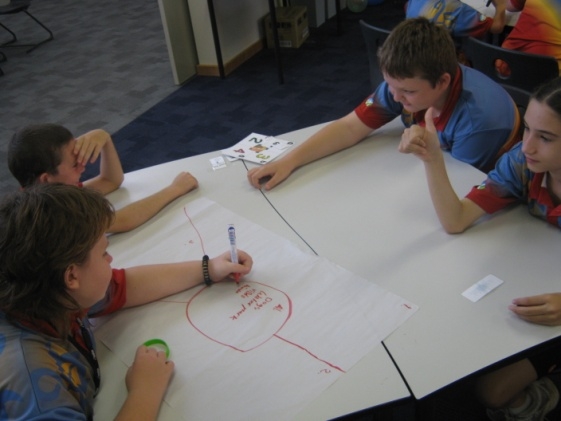
We have chosen Kagan Cooperative Learning as the overarching pedagogical approach at Rosebery.

It is based on the creation, analysis and systematic application of structures, or content-free ways of organising social interaction in the classroom. Structures usually involve a series of steps, with prescribed behaviour at each step.

All Kagan structures are designed to maximise four attributes among students:

  • Positive interdependence:  ‘Is a gain for one, a gain for all?’
  • Individual accountability: ‘Is there required individual performance?’
  • Equal Participation:  ‘How equal is the participation?’
  • Simultaneous Interaction: ‘What percent of students are overtly active at any one time?’

The Kagan model defines over 150 repeatable, step-by-step, content-free ways to structure the interaction of student with each other, the curriculum, and the teacher.  The structures are very empowering for a teacher.  For example, once a teacher understands the steps of one simple structure, RallyRobin (student in pairs take turns saying something), the teacher can use RallyRobin to have young students name colours, for example, or older students name prime numbers.

RallyRobin can be used as a set for any lesson (name things you already know about the topic; name things you would like to learn about the topic), for practice (take turns inserting colourful adjectives into a sentence frame), or for closure (name things you have learned).

Once the teacher knows any one structure, the teacher can easily generate an infinite number of activities.  The basic formula in the Kagan model is Structure + Content = Activity.  The teacher merely ‘plugs in’ his/her content into one of the Kagan structures to create a new, engaging activity for students.  Because the structures have the basic principles of cooperative learning ‘built in’ to their steps, the job of the teacher in creating solid cooperative learning activities is very easy.

You can find more information about Kagan here.

Kagan Cooperative LearningKagan Cooperative Learning

Restorative Practices

StudentsOur selection of Restorative Practices as our underpinning philosophy for behaviour management and student wellbeing is an important one.

The key aims of Restorative Practices are to:

  • Focus the students on the harm caused and relationships affected when poor behaviour choices are made.
  • To act upon repairing this harm and these relationships, by taking full responsibility for our actions.
  • To promote ways of caring for each other and using language in our school that develops morals and values in our students.

A key feature of Restorative Practices is that it assists us to focus on the past, present and future when there is conflict. Traditional behaviour management strategies have a stronger focus on blame and punishment as a deterrent for poor behaviours, however this leaves us too focussed on the past and fails to involve students and their families in the solutions.


When dealing with situations restoratively, our teachers will use a series of questions to help students come to fair and effective resolutions:

For those who may have caused the harm:

  • What happened?
  • What were you thinking of at the time?
  • What have you thought about since?
  • Who has been affectred by what you have done? In what way?
  • What do you think you need to do to make things right?

For those affected:

  • What did you think when you realised what had happened?
  • What impact has this incident had on you and others?
  • What has been the hardest thing for you?
  • What do you think needs to happen to make things right?

At Rosebery PS, we are very excited about how Restorative Practices contributes to making our school one where community matters. We care for each other and the feelings generated by being a part of our school are ones that reflect a commitment to being positive, safe and friendly.

  1. Defence Mentor
  2. After School Care

Page 1 of 2

  • 1
  • 2

Sun Smart UV

School Calendar

«
<
June 2026
>
»
M T W T F S S
1 2 3 4 5 6 7
8 9 10 11 12 13 14
15 16 17 18 19 20 21
22 23 24 25 26 27 28
29 30 1 2 3 4 5

Latest Events

No events
Copyright © 2011-2026 Rosebery Primary School
Rosebery Primary School
  • Home
  • Teaching Approaches
    • Kagan Co-operative Learning
    • Behaviour & Wellbeing
    • Welcome to Rosebery Primary
  • Facilities
    • Barylicious Canteen
    • Pre-School
    • Defence School Mentor
    • Outside School Care
  • School
    • School Annual Reports & Plans
    • History of RPS
    • Enrolments
    • School Policies
    • Staff
    • Sports Houses and House Captains
    • Student Population
    • Student Leadership
  • Parents
    • Cyber Safety
    • Uniforms and Supplies
    • School Council
    • Parent Handbook
    • 2024 Newsletters
    • 2025 Newsletters
    • 2026 Newsletters
  • Contact Us
    • Operating Times
    • Key Contacts
    • RPS Location
    • Absentee Form
  • Resources